
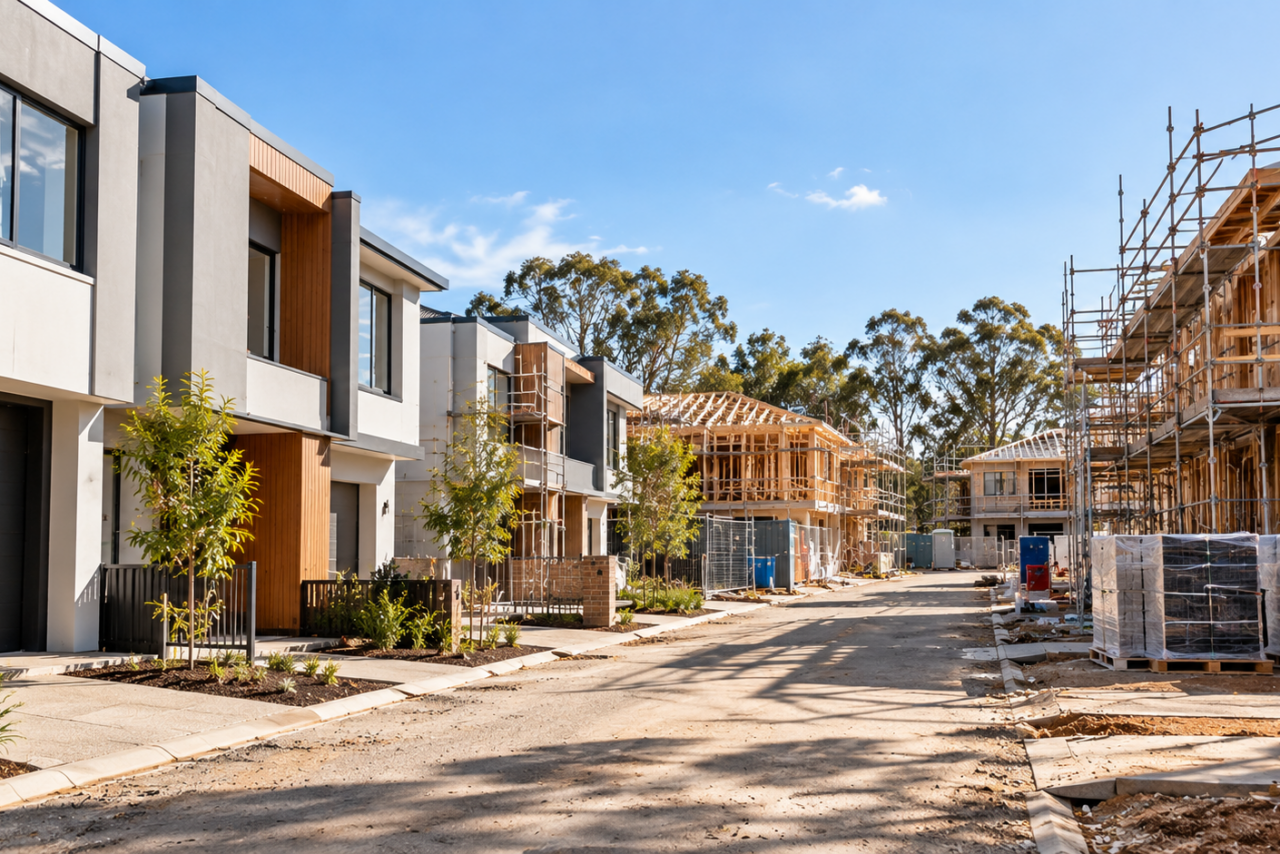

Property development can be an effective way to create value, build wealth and expand your property investment portfolio. However, turning a vacant block of land or an existing property into a completed development involves much more than purchasing a site and beginning construction.
From identifying suitable land and assessing financial feasibility to securing council approvals, managing construction and completing the project, every stage requires careful planning.
For investors considering property development in Australia, understanding the process is essential to managing risks, controlling costs and making informed decisions.
Whether you’re planning to build a duplex, develop townhouses or undertake a larger residential project, knowing what to expect can help you navigate the journey with greater confidence.
In this guide, we break down the property development process from land purchase to completion and explore the key considerations at each stage.
1. Define Your Property Development Strategy
Before purchasing land, it’s important to establish what you want to achieve through property development.
Your objectives will influence the type of site you purchase, the scale of the development and how the project is financed.
Common property development strategies include:
- Building a duplex on a suitable residential block
- Subdividing land into multiple allotments
- Constructing townhouses or villas
- Developing multiple residential dwellings
- Renovating and extending an existing property
- Building properties to sell or retain as rental investments
Some developers aim to generate a profit by selling completed properties, while others prefer to retain them for long-term rental income and potential capital growth.
Understanding your intended outcome helps determine the most appropriate project size, location and budget.
Key takeaway: A clear development strategy should guide your land purchase, rather than allowing the land purchase to dictate your strategy.
2. Find and Assess Suitable Development Land
Finding the right development site is one of the most important stages of the property development process.
Not every vacant block or large residential allotment is suitable for development.
A property may appear attractive based on its size and location, but planning restrictions, site conditions or infrastructure limitations can significantly affect its development potential.
When assessing potential development land, consider:
Land Size and Dimensions
The size, frontage, depth and shape of a block can influence the number and type of dwellings that may be achievable.
A rectangular block with suitable street frontage may offer greater design flexibility than an irregularly shaped allotment.
However, minimum lot sizes and development requirements vary between councils and planning zones.
Zoning and Planning Controls
Local planning regulations determine how land may be used and what types of development may be permitted.
Before purchasing, investigate:
- Land zoning
- Minimum lot size requirements
- Building height restrictions
- Setbacks and site coverage limits
- Heritage or environmental overlays
- Parking and access requirements
- Subdivision restrictions
Planning rules differ across Australian states, territories and local councils.
Site Conditions
The physical characteristics of the land can also affect development costs.
Important considerations include slope, soil conditions, drainage, easements, existing trees and access to utilities.
A relatively inexpensive block may become costly if significant excavation, retaining walls or infrastructure upgrades are required.
3. Conduct a Property Development Feasibility Study
Once a potential development site has been identified, the next step is assessing whether the project is financially viable.
A property development feasibility study estimates the likely costs, revenue and potential profitability of the proposed project.
This is one of the most important steps before committing to a purchase.
Common Development Costs
A feasibility assessment should consider:
- Land purchase price
- Stamp duty and acquisition expenses
- Legal and conveyancing fees
- Architectural and design costs
- Town planning and engineering fees
- Council application fees and development contributions
- Demolition and site preparation
- Construction costs
- Utility connections
- Finance and interest expenses
- Insurance and holding costs
- Marketing and selling expenses
- GST and other applicable taxes
- Contingency allowances
Estimate the Potential End Value
The estimated end value is the amount the completed development may be worth or achieve when sold.
This should be supported by comparable sales of similar completed properties in the surrounding market.
For example, if a proposed development involves three townhouses, investors should assess recent sales of comparable townhouses rather than relying solely on asking prices or optimistic projections.
Calculate the Potential Profit
A simplified development feasibility calculation is:
Estimated Development Profit = Total Development Revenue − Total Development Costs
For example:
| Item | Illustrative Amount |
|---|---|
| Land purchase | $600,000 |
| Construction | $900,000 |
| Other development costs, finance, tax allowances and contingency | $350,000 |
| Total development costs | $1,850,000 |
| Estimated completed sales revenue | $2,100,000 |
| Estimated development profit | $250,000 |
These figures are hypothetical and are provided for illustration only. Actual development costs, tax liabilities and profit depend on the project.
A detailed feasibility study should also test how profitability changes if construction costs rise, sales prices fall or the project takes longer than expected.
Key takeaway: A project should demonstrate an appropriate financial margin before construction begins, with sufficient allowance for unexpected costs.
4. Secure Finance for the Development
Property development finance differs from a standard residential home loan.
Depending on the scale and structure of the project, lenders may assess the development’s feasibility, proposed construction costs, projected end value and the developer’s financial position.
Finance options may include:
- Equity from existing property
- Residential construction loans for eligible smaller projects
- Commercial property development finance
- Joint venture arrangements
- Private development funding
Lenders may require supporting documents such as approved plans, construction contracts, feasibility assessments and evidence of available funds.
Some development loans are released progressively as construction milestones are completed.
It’s important to understand loan conditions, interest expenses, funding timeframes and any pre-sale requirements before proceeding.
Working with a finance professional experienced in property development can help investors assess suitable funding arrangements.
5. Complete Due Diligence Before Purchasing the Land
Before finalising a land purchase, comprehensive due diligence is essential.
This stage helps confirm whether the proposed development is physically, legally and financially achievable.
Depending on the site, professional investigations may include:
- Town planning assessment
- Title and easement searches
- Surveying and boundary confirmation
- Soil and geotechnical testing
- Flood and bushfire risk assessments
- Stormwater and drainage investigations
- Utility availability and connection assessments
- Environmental or contamination investigations
- Preliminary architectural design
- Legal review of purchase conditions
Investors should also investigate whether nearby developments could affect future demand or achievable sale prices.
Where possible, appropriate contractual conditions may help manage certain risks before settlement. These should be reviewed by an independent property lawyer or conveyancer.
Purchasing land without understanding its restrictions can result in costly redesigns, delays or an unviable development.
6. Engage Your Property Development Team
Successful property development typically requires input from several experienced professionals.
Depending on the size and complexity of the project, your team may include:
Property Development Consultant
A development consultant can assist with identifying suitable sites, assessing feasibility and coordinating key stages of the project.
Town Planner
A town planner interprets planning controls and helps prepare development applications.
Architect or Building Designer
Architects and designers develop plans that balance planning requirements, construction practicality and market appeal.
Surveyor
Surveyors confirm boundaries, levels and other site characteristics required for planning and construction.
Engineers
Civil, structural and other engineers provide technical advice relating to drainage, foundations, services and structural requirements.
Builder
The builder is responsible for delivering construction in accordance with the relevant contract, approved documentation and applicable requirements.
Legal and Finance Professionals
Property lawyers, conveyancers, accountants and finance specialists help manage the legal, financial and tax considerations of the development.
Engaging suitable professionals early can reduce the likelihood of expensive mistakes later.
7. Prepare Development Plans and Designs
Once the site’s feasibility has been assessed, the design process begins.
This stage involves developing a proposal that meets planning requirements while remaining commercially viable.
The design should consider:
- Number and configuration of dwellings
- Building orientation and natural light
- Privacy and neighbouring properties
- Vehicle access and parking
- Landscaping and open space
- Energy efficiency
- Construction efficiency
- Local buyer and tenant preferences
For example, a townhouse development targeting families may benefit from practical living spaces, adequate storage, multiple bedrooms and suitable parking.
A development targeting downsizers may place greater emphasis on accessibility and low-maintenance design.
The objective is to create a development that is both achievable under planning controls and attractive to the intended market.
8. Obtain Council and Planning Approvals
Before construction can begin, the proposed development may require planning approval from the relevant authority.
The approval process varies depending on the location, zoning and nature of the project.
A typical planning process may involve:
- Preparing architectural drawings and supporting reports.
- Lodging the relevant development or planning application.
- Council or authority assessment.
- Responding to requests for additional information.
- Public notification or consultation, where required.
- Receiving an approval, potentially subject to conditions.
Some developments may qualify for streamlined approval pathways, while others require more detailed assessment.
Approval timeframes can vary considerably.
Importantly, receiving planning approval does not necessarily mean construction can begin immediately.
Additional building approvals, permits and compliance requirements may still apply.
9. Finalise Construction Documentation and Building Approvals
After the relevant planning approvals are obtained, the project generally progresses into detailed construction documentation.
This stage may include:
- Structural engineering drawings
- Detailed building specifications
- Energy efficiency assessments
- Hydraulic and drainage plans
- Final material selections
- Building permit or construction certificate requirements
- Compliance with applicable building standards
These documents provide the technical information required for construction.
They also help builders prepare more accurate quotations and identify potential issues before work begins.
The exact approval pathway depends on the state, territory and project type.
10. Select a Builder and Finalise Construction Costs
Choosing the right builder is critical to the success of a development project.
Investors should assess more than the quoted construction price.
Important considerations include:
- Relevant licences and registrations
- Experience with similar developments
- Financial stability
- Previous project quality
- Construction timeframe
- Contract inclusions and exclusions
- Insurance and warranty requirements
- Variation procedures
- Payment schedules
A detailed building contract should clearly identify the scope of work, specifications, agreed pricing arrangements and responsibilities of each party.
It is also important to understand which costs are fixed and which may change during construction.
Independent legal advice should be obtained before signing a construction contract.
11. Begin Site Preparation and Construction
Once the necessary approvals, finance arrangements and construction contracts are in place, physical development can begin.
The first stage generally involves preparing the site for building.
Depending on the project, this may include:
- Demolition of existing structures
- Clearing and earthworks
- Excavation and site levelling
- Drainage installation
- Retaining walls
- Temporary site services
- Foundation preparation
Construction then progresses through several stages.
Foundation and Slab
Footings and foundations are completed according to the approved engineering design.
Structural Frame
The building’s structural framework is installed.
Roofing and External Enclosure
Roofing, external walls, windows and doors are completed to progressively weatherproof the building.
Internal Services and Fit-Out
Plumbing, electrical services, insulation, plastering, cabinetry and other internal elements are installed.
Finishing Works
Painting, flooring, fixtures, landscaping and final finishes are completed.
Construction sequencing varies depending on the design, building method and project complexity.
12. Monitor Construction Progress and Manage Costs
Property development requires ongoing monitoring throughout construction.
Even with careful planning, unexpected challenges can arise.
Common issues include:
- Weather delays
- Material shortages
- Labour availability
- Design changes
- Unexpected ground conditions
- Construction variations
- Delays with utility connections
- Additional compliance requirements
Regular progress reporting and appropriate inspections can help identify problems early.
Investors should also monitor actual expenditure against the approved development budget.
Maintaining a contingency allowance is important because even relatively small variations can affect the project’s final profitability.
Clear communication between the builder, consultants and project stakeholders helps keep the development organised.
13. Complete Final Inspections and Obtain Required Certifications
As construction approaches completion, the project must undergo the relevant inspections and compliance processes.
Depending on the jurisdiction and development type, these may involve:
- Building inspections
- Plumbing and electrical compliance
- Fire safety requirements
- Waterproofing and structural compliance
- Final engineering documentation
- Occupancy permits or certificates
- Completion of planning approval conditions
Any identified defects or outstanding works should be addressed through the appropriate contractual process.
Investors should confirm that all necessary approvals and certificates are obtained before the completed property is occupied or transferred where required.
14. Finalise Subdivision and Titles Where Applicable
For projects involving multiple dwellings or newly created lots, subdivision may be an important part of the development process.
This can involve obtaining subdivision approvals, completing infrastructure requirements and registering the relevant plans.
Separate titles may be required if the intention is to sell individual dwellings or allotments independently.
The timing and requirements depend on the jurisdiction, planning conditions and development structure.
Delays in obtaining titles can affect settlement dates and project cash flow, so subdivision should be considered early in the development timeline.
15. Sell, Lease or Retain the Completed Development
Once the development is complete, the final stage is implementing the project’s intended exit strategy.
There are several options.
Sell the Completed Properties
Some developers choose to sell completed dwellings to realise their development profit.
This requires careful consideration of local buyer demand, comparable sales, selling costs and applicable taxes.
Retain the Properties as Investments
Other investors prefer to retain some or all completed dwellings as rental properties.
This approach may provide ongoing rental income and exposure to potential future capital growth.
However, investors must assess refinancing requirements, loan repayments, maintenance costs and rental demand.
Sell Some and Retain Others
Depending on the project’s financial structure, investors may choose to sell selected dwellings while retaining others.
This strategy may help reduce debt while maintaining an investment portfolio.
The appropriate exit strategy should be considered during the initial feasibility stage rather than left until construction is complete.
How Long Does the Property Development Process Take?
The time required to complete a property development project depends on its size, complexity, location and approval requirements.
Smaller residential developments may take considerably less time than large townhouse or apartment projects.
The overall timeframe can be influenced by:
- Land acquisition and settlement
- Site investigations
- Design preparation
- Planning approval
- Building approvals
- Finance arrangements
- Construction
- Subdivision and title registration
- Final inspections and settlement
Delays can occur at any stage, so investors should avoid relying on overly optimistic completion dates.
A realistic development program should include allowances for potential delays and their associated holding costs.
Common Property Development Mistakes to Avoid
Understanding the development process can help investors avoid several common mistakes.
Purchasing Land Without Confirming Development Potential
A large block does not automatically mean multiple dwellings can be constructed.
Zoning, overlays, access and servicing requirements must be investigated.
Underestimating Development Costs
Failing to account for professional fees, infrastructure connections, finance expenses and contingencies can significantly affect profitability.
Overestimating End Values
Relying on unrealistic resale prices can make a project appear more profitable than it actually is.
Comparable sales and conservative assumptions are essential.
Choosing the Wrong Development Location
Even a well-designed development may struggle if local buyer demand is insufficient or competing supply is excessive.
Failing to Plan for Delays
Extended approval or construction timeframes can increase interest expenses and other holding costs.
Not Having a Clear Exit Strategy
Developers should understand whether the project is intended for sale, long-term rental or a combination of both before committing significant capital.
Why Work With DDP Projects?
At DDP Projects, we understand that property development involves multiple decisions, financial commitments and potential risks.
From assessing land opportunities and development feasibility to understanding planning requirements and coordinating the development journey, having access to experienced professionals can help investors make more informed decisions.
Our approach focuses on evaluating opportunities based on location, project feasibility, market demand and long-term investment objectives.
Whether you’re considering your first residential development or exploring opportunities to expand your property portfolio, understanding the development process is an important starting point.
Interested in exploring property development opportunities?
Contact DDP Projects to discuss your goals and learn more about the considerations involved in planning a property development project.
Visit: https://ddpprojects.com.au/
Final Thoughts: Successful Property Development Starts With Planning
The property development process involves much more than purchasing land and constructing buildings.
From site selection and feasibility analysis to planning approvals, finance, construction and completion, each stage plays an important role in the project’s overall success.
While property development can create opportunities for financial growth, it also involves substantial costs, regulatory requirements and market risks.
Careful research, realistic budgeting and professional advice can help investors navigate these challenges.
By understanding the process before committing to a project, investors can make more informed decisions and establish a stronger foundation for their property development journey.
Frequently Asked Questions
What are the main stages of property development in Australia?
The main stages generally include defining a development strategy, identifying suitable land, conducting feasibility assessments, securing finance, obtaining planning and building approvals, completing construction, undertaking final inspections and implementing an exit strategy.
How much money do you need to start property development?
The amount required depends on the land price, project scale, construction costs, finance arrangements and other development expenses. Investors should also budget for professional fees, holding costs and contingencies.
Do you need council approval to develop property?
Many property developments require planning approval, although requirements vary by location and project type. Building approvals and other permits may also be necessary.
How long does it take to complete a property development?
Development timeframes vary significantly depending on planning requirements, construction complexity, financing and other factors. Delays should be considered when preparing the project’s financial feasibility.
Is property development profitable?
Property development can be profitable when the completed value exceeds all development costs by a sufficient margin. However, profitability is not guaranteed, and investors face risks such as construction cost increases, delays and market fluctuations.
Can beginners get involved in property development?
Yes, but beginners should understand the financial and regulatory complexities involved. Professional guidance, comprehensive feasibility assessments and a realistic budget are especially important for first-time developers.
What is a property development feasibility study?
A feasibility study assesses whether a proposed development is financially viable by estimating acquisition costs, construction expenses, finance costs, potential sales revenue and project profitability.
What happens after construction is completed?
After construction, the project may require final inspections, compliance certificates, subdivision registration and completion of outstanding works. The developer can then implement the planned strategy of selling, leasing or retaining the properties.
Leave a Reply