
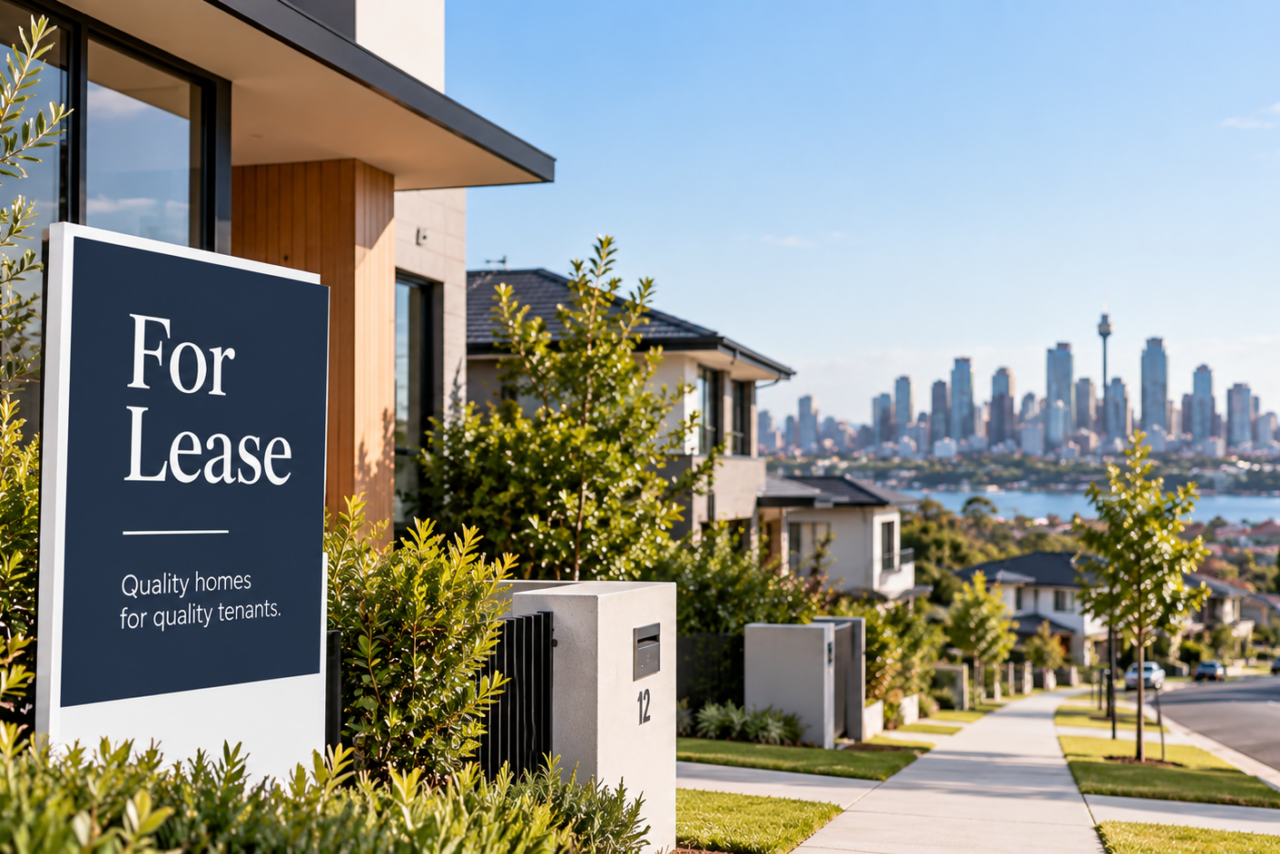

When assessing a potential property project, it’s easy to focus on the numbers associated with development: the purchase price, construction costs, projected end value and expected profit.
But there’s another factor investors shouldn’t overlook:
Who is actually going to live in the finished property?
Rental demand can have a major influence on the performance of a property project, particularly when the strategy involves holding one or more completed properties as investments.
A project may look attractive on paper, but if it’s located in an area with weak tenant demand, excessive rental supply or properties that don’t suit the local demographic, the finished product could take longer to lease or achieve a lower rent than expected.
Strong rental demand, on the other hand, can support occupancy, rental income and the overall holding position of a project.
This is why rental-market research should form part of the due diligence process before committing to a development opportunity.
What Is Rental Demand?
Rental demand refers to the level of demand from tenants looking for properties within a particular market.
Strong rental demand generally means there is a healthy pool of potential tenants competing for the available rental properties.
Weak rental demand can mean there are more available properties relative to the number of people looking to rent them.
For property investors and developers, understanding this relationship is important because it can affect:
- Vacancy periods
- Achievable rent
- Rental yield
- Cash flow
- Tenant selection
- Holding costs
- Long-term investment performance
Rental demand isn’t simply about whether people rent in a suburb. The more important question is whether there’s sufficient demand for the specific type of property you’re planning to create.
1. Rental Demand Can Reduce Vacancy Risk
Every week an investment property sits vacant is a week without rental income.
Imagine a newly completed property is expected to rent for $650 per week.
Four weeks without a tenant represents approximately:
$2,600 in lost gross rental income.
Eight weeks represents approximately:
$5,200.
For an investor carrying development debt, mortgage repayments, council rates, insurance and other expenses, extended vacancy periods can quickly affect cash flow.
This is why a high projected rental figure means very little if there aren’t enough tenants willing to pay it.
The objective isn’t simply to achieve the highest possible rent.
It’s to create a property that has consistent tenant demand at a sustainable market rent.
2. Vacancy Rates Can Reveal Important Market Conditions
One indicator investors can examine is the local vacancy rate.
A vacancy rate measures the proportion of rental properties that are currently vacant within a particular market.
Generally, a lower vacancy rate can indicate tighter rental supply relative to tenant demand.
A higher vacancy rate may suggest tenants have more properties to choose from.
However, vacancy rates shouldn’t be analysed in isolation.
For example, a suburb might currently have a low vacancy rate but also have thousands of new apartments under construction.
If a large amount of rental stock enters the market around the time your development is completed, rental conditions could change.
Investors therefore need to look at both:
Current rental conditions + future housing supply
rather than relying solely on today’s vacancy rate.
3. Rental Demand Can Influence Your Property Design
Rental research shouldn’t only help determine where to develop.
It can also help determine what to develop.
Different locations attract different tenant demographics.
One suburb may have strong demand from:
- Young professionals
- Couples
- University students
Another may primarily attract:
- Families
- Healthcare workers
- Retirees
- Tradespeople
- Government employees
The property should ideally reflect the people most likely to rent it.
For example, a family-oriented market may favour:
- Three or four bedrooms
- Multiple bathrooms
- Secure parking
- Outdoor space
- Storage
- Practical living areas
A market dominated by young professionals may place greater importance on:
- Proximity to employment
- Public transport
- Low-maintenance living
- Modern finishes
- Secure parking
- Lifestyle amenities
Building the wrong property for the local demographic can make an otherwise promising project harder to lease.
4. Strong Rental Demand Can Support Rental Growth
Rental demand can also influence how rents perform over time.
When tenant demand grows faster than rental supply, competition for available properties can increase.
Subject to market conditions, this may support rental growth.
For a long-term investor, rental growth can be important because property expenses and finance costs can also change over time.
Consider a property initially renting for:
$550 per week
Annual gross rent:
$28,600
If market rent eventually increases to:
$650 per week
Annual gross rent becomes:
$33,800
That’s an additional $5,200 in gross annual rental income.
Rental growth isn’t guaranteed, but choosing markets with sustainable demand and appropriate supply conditions can strengthen the longer-term investment case.
5. Rental Demand Directly Affects Cash Flow
For property investors, cash flow is influenced by more than the property’s purchase or construction price.
Rental income is one side of the equation.
A simplified calculation might look like:
Rental Income – Finance Costs – Property Expenses = Approximate Cash Flow
Expenses may include:
- Loan interest
- Property management
- Council rates
- Water charges
- Insurance
- Maintenance
- Strata or body corporate fees where applicable
- Land tax where applicable
- Vacancy periods
If the projected rental income isn’t supported by actual market demand, the project’s cash-flow assumptions may be overly optimistic.
That’s why rental estimates used in a feasibility study should ideally be based on recent comparable rental evidence, rather than simply the amount required to make the numbers work.
6. Rental Yield Doesn’t Tell the Whole Story
Rental yield is commonly used when comparing investment properties.
The basic gross rental yield calculation is:
Annual Rental Income ÷ Property Value × 100
For example:
Property value: $600,000
Rent: $600 per week
Annual rent:
$600 × 52 = $31,200
Gross rental yield:
$31,200 ÷ $600,000 × 100 = 5.2%
A 5.2% gross yield may look attractive.
But yield alone doesn’t tell you how easy the property will be to lease.
An investor should also ask:
- How many similar properties are available?
- How quickly are they leasing?
- What are tenants actually paying?
- Are rents increasing or declining?
- Is new rental supply coming?
- Who are the likely tenants?
- Is the property’s design suitable for them?
A high advertised yield means little if the property regularly sits vacant.
7. Population Growth Can Create Rental Demand
Population growth is one of the factors that can contribute to housing demand.
When more people move into an area, they need somewhere to live.
Not everyone moving into an area immediately purchases a home.
Many will initially rent.
Population growth may be supported by factors such as:
- New employment opportunities
- Infrastructure investment
- Universities
- Hospitals
- Government projects
- Lifestyle migration
- Relative housing affordability
But population growth should still be compared against housing supply.
A rapidly growing population doesn’t automatically create a tight rental market if housing construction is increasing even faster.
8. Employment Is an Important Driver of Tenant Demand
People generally want to live within reasonable access of employment.
That’s why employment diversity can be an important consideration when researching a potential property project.
A market supported by multiple industries may attract a broader tenant base than a location dependent on one employer or industry.
Investors can consider proximity to:
- CBD employment
- Hospitals
- Universities
- Industrial precincts
- Business parks
- Government employment
- Retail centres
- Logistics hubs
- Major infrastructure projects
The more reasons people have to live and work in a location, the broader the potential tenant pool may become.
9. Infrastructure Can Change Rental Demand
Infrastructure can influence how desirable a location is for tenants.
Projects such as:
- New train stations
- Road upgrades
- Hospitals
- Schools
- Universities
- Shopping precincts
- Employment hubs
can improve accessibility or create new employment opportunities.
However, investors need to distinguish between announced infrastructure and infrastructure that is funded, underway or completed.
A speculative announcement shouldn’t automatically form the basis of an investment decision.
Infrastructure should be considered alongside other fundamentals, including population, supply, employment and rental-market conditions.
10. Future Supply Matters Just as Much as Current Demand
One of the biggest mistakes investors can make is looking only at today’s rental market.
Imagine a suburb currently has:
- Low vacancy
- Strong rents
- High tenant demand
At first glance, it appears ideal.
But further research reveals several thousand new dwellings have been approved nearby.
By the time your project is completed, tenants may have significantly more choice.
This can potentially affect:
- Vacancy periods
- Rental growth
- Incentives required to attract tenants
- Resale competition
For property projects, the timeline makes this particularly important.
You’re not simply assessing the rental market today.
You’re trying to understand what the rental market could look like when the project is completed.
11. Avoid Creating a Property Tenants Don’t Want
A project can be technically feasible while still producing an undesirable rental product.
Imagine building a premium four-bedroom townhouse in an area where the majority of tenants are single professionals looking for affordable one and two-bedroom accommodation.
The property may be beautifully designed, but the tenant pool could be limited.
Conversely, building compact apartments in a family-dominated market may create the opposite problem.
This is why successful development requires more than simply maximising the number of dwellings that can fit on a site.
The end product needs to suit the market.
12. Amenities Can Strengthen Tenant Appeal
Rental demand can vary significantly even within the same suburb.
Tenants often place a premium on convenience.
Properties with good access to everyday amenities may appeal to a broader tenant market.
Depending on the demographic, this could include proximity to:
- Schools
- Supermarkets
- Medical facilities
- Public transport
- Employment
- Parks
- Shopping centres
- Restaurants and cafés
- Universities
- Major roads
This is why two similar projects within the same suburb can achieve very different rental outcomes.
Micro-location matters.
13. Property Features Can Affect Rental Demand
Once you’ve identified the appropriate location and property type, individual features can influence tenant appeal.
Depending on the market, tenants may value:
- Additional bedrooms
- Second bathrooms
- Secure parking
- Air conditioning
- Built-in wardrobes
- Storage
- Outdoor entertaining areas
- Low-maintenance landscaping
- Modern kitchens
- Natural light
- Energy efficiency
- Functional floorplans
Not every feature will justify its construction cost.
The goal is to understand which features tenants in that particular market value enough to influence rental demand or achievable rent.
14. Rental Demand Matters Even If You Plan to Sell
Rental-market research isn’t only relevant to developers planning to retain the completed properties.
It can also matter when the strategy is to sell.
Why?
Because investors may form part of the potential buyer pool.
A completed property with:
- Strong rental demand
- Attractive rental yield
- Low vacancy
- Established tenant appeal
may be more attractive to an investment buyer.
This can potentially broaden the project’s resale market beyond owner-occupiers.
However, a development should generally not rely entirely on one type of buyer.
Understanding both owner-occupier and investor demand can help create a more marketable end product.
15. Rental Demand Should Be Included in Your Feasibility
A property development feasibility assessment often focuses heavily on costs and projected sale values.
Rental assumptions should also be included when the strategy involves holding the completed property.
For example, your feasibility might assess:
| Metric | What to Review |
|---|---|
| Expected rent | Comparable leased properties |
| Vacancy rate | Current rental-market tightness |
| Rental listings | Number of competing properties |
| Days on market | How quickly rentals are leasing |
| Rental growth | Direction of local rents |
| Tenant demographic | Who is likely to rent |
| Future supply | New dwellings under construction |
| Property type | Demand for the proposed product |
| Employment | Local jobs and economic diversity |
| Amenities | Convenience for future tenants |
This provides a much stronger picture than simply assuming a rental figure.
16. Speak With Local Property Managers
Data is important, but local property managers can provide another useful perspective.
A property manager operating in the area may be able to explain:
- Which property types receive the most enquiries
- Which properties are difficult to lease
- What tenants are requesting
- Realistic rental ranges
- Common vacancy periods
- Which features attract higher rents
- Whether tenant demand is changing
This can be particularly valuable during the early stages of a project.
Instead of completing the development and then asking what tenants want, investors can incorporate that information before finalising the project.
17. Don’t Chase High Rent Without Understanding the Market
It’s tempting to choose a project because the projected rent looks impressive.
But investors need to ask whether that rent is genuinely achievable.
Suppose a feasibility assumes:
$750 per week
but comparable properties are consistently leasing for:
$650–$680 per week.
That $70–$100 weekly difference could significantly change the project’s expected cash flow.
A $100 weekly difference equals:
$5,200 per year.
Across multiple dwellings, inaccurate rental assumptions can become substantial.
Conservative feasibility assumptions are generally more useful than optimistic figures designed to make a project appear attractive.
18. Strong Rental Demand Can Improve Holding Flexibility
One of the advantages of developing in a strong rental market is having more than one potential exit strategy.
An investor may initially intend to sell the completed property.
But if market conditions change, they may decide to hold it instead.
If the property has strong tenant demand and sustainable rental income, holding may be more financially manageable.
This creates optionality.
Depending on the project and financial circumstances, potential strategies could include:
Develop and sell
Develop and hold
Sell some and retain others
Refinance and hold
Having several viable options can be valuable when market conditions change during a development.
19. Rental Demand Should Be Sustainable, Not Temporary
Investors should also distinguish between sustainable demand and temporary demand.
For example, rental demand might temporarily increase because of:
- A short-term construction project
- Temporary workforce accommodation requirements
- A single major employer
- An unusual supply disruption
That doesn’t necessarily mean demand will remain strong over the long term.
For projects with a long investment horizon, sustainable demand supported by diversified employment, population growth, amenities and limited supply can be more important than a short-term rental spike.
20. Rental Demand Is Only One Part of the Decision
Strong rental demand doesn’t automatically make a project a good investment.
Investors still need to assess:
- Site acquisition cost
- Planning controls
- Zoning
- Construction costs
- Development approval
- Finance costs
- Holding costs
- Infrastructure contributions
- End values
- Profit margin
- Tax implications
- Market supply
- Exit strategy
Rental demand should complement a strong overall feasibility rather than replace it.
The strongest property projects generally bring several factors together:
Right location + right site + right product + realistic costs + genuine market demand.
How to Research Rental Demand Before Choosing a Project
Before proceeding with a property project, investors can investigate several indicators.
Step 1: Review Vacancy Rates
Understand whether the rental market is tight or oversupplied.
Step 2: Analyse Comparable Rentals
Look at properties similar to what you intend to create.
Step 3: Check Current Rental Listings
Understand how much competing stock tenants currently have to choose from.
Step 4: Research Population Trends
Determine whether the local population is expanding.
Step 5: Examine Employment
Look for diversified and sustainable employment drivers.
Step 6: Investigate Future Housing Supply
Check development approvals and construction activity.
Step 7: Understand Tenant Demographics
Determine who is renting and what property types they need.
Step 8: Speak With Local Property Managers
Validate the data with professionals dealing directly with tenants.
Step 9: Stress-Test the Rent
Run your feasibility using a lower rent than expected.
Step 10: Consider Your Exit Strategy
Understand whether the project still works if you need to hold rather than sell.
Why Choose DDP Projects?
At DDP Projects, we believe a successful property project starts long before construction begins.
It starts with identifying the right opportunity and understanding whether the numbers, location and end product make sense.
Rental demand is an important part of that research.
Our approach considers the broader factors that can influence a project’s performance, including:
- Market demand
- Population growth
- Rental conditions
- Housing supply
- Infrastructure
- Employment
- Site potential
- Development feasibility
- Project strategy
The aim isn’t simply to develop property.
It’s to create a project supported by genuine market demand and aligned with the investor’s longer-term strategy.
If you’re considering your next property project, understanding who will ultimately rent or buy the finished property should be part of the decision from day one.
Frequently Asked Questions
Why is rental demand important for property development?
Rental demand can influence vacancy periods, achievable rent, cash flow and the attractiveness of a completed development to investors. It is particularly important when the developer intends to retain some or all of the completed properties.
What is a good vacancy rate for an investment property?
Vacancy rates should be considered relative to the individual market and alongside other indicators. A lower vacancy rate can indicate tighter rental supply, but investors should also investigate future housing construction and changes in tenant demand.
How do I know whether a suburb has strong rental demand?
Investors can examine vacancy rates, rental listings, rental growth, population trends, employment, future housing supply and comparable properties. Local property managers can also provide useful insight into current tenant enquiry.
Does high rental yield mean strong rental demand?
Not necessarily. A property can offer a high advertised yield while still experiencing long vacancy periods or weak long-term growth. Yield should be assessed alongside vacancy rates, tenant demand and market fundamentals.
Can rental demand affect property values?
Rental demand can contribute to the attractiveness of a property to investors, but property values are influenced by many factors, including owner-occupier demand, supply, population, employment, credit conditions and the quality of the individual property.
Should developers speak to property managers before building?
It can be useful. Local property managers may provide insight into which property types tenants are seeking, realistic rental ranges and features that can improve tenant appeal.
Does future housing supply affect rental demand?
Yes. Significant new housing supply can increase the number of rental properties available and potentially change vacancy rates, rental growth and tenant competition.
Is rental demand important if I plan to sell the development?
It can still be relevant because investors may form part of the buyer market. Strong rental fundamentals can make a completed property more attractive to potential investment buyers.
Leave a Reply